
Racism in Canada is the systemic allocation of power, resources, and dignity along racial lines, privileging white Canadians while marginalizing Indigenous, Black, Asian, and other racialized communities through policies, practices, and cultural norms. It isn’t simply individual prejudice or isolated incidents of hatred. It’s a structural architecture built into Canadian institutions, from child welfare systems that disproportionately apprehend Indigenous children to hiring algorithms that screen out applicants with non-anglicized names, from discriminatory policing practices to the ongoing denial of land rights and sovereignty.
Canadians love the myth of our nation as a tolerant multicultural haven, kinder and gentler than our neighbors to the south. This narrative actively obscures the violence embedded in our history and present. We built this country on the dispossession of Indigenous peoples, welcomed Chinese laborers to construct our railways while enacting head taxes to prevent their families from joining them, turned away ships of Sikh and Jewish refugees, and imprisoned Japanese Canadians during the Second World War. These aren’t relics of a shameful past we’ve transcended. The logics that justified those atrocities continue to shape who gets healthcare, who gets believed by police, whose children thrive in schools, and who dies in unsafe housing.
Understanding racism through a feminist lens reveals how race and gender interlock. Indigenous women face violence at rates exponentially higher than any other group in Canada. Black women navigate both anti-Black racism and misogynoir in workplaces that tokenize them while denying promotions. Migrant women of color labor in precarious care work that props up the economy while being excluded from labor protections and pathways to citizenship.
This article cuts through the platitudes about diversity to examine how racism actually operates in Canada, what forms it takes across institutions and daily life, and why dismantling it requires more than good intentions or representation. We’ll explore the mechanisms that perpetuate racial hierarchy, the intersections with other systems of oppression, and what accountability and reparation genuinely demand.
What Racism in Canada Really Means
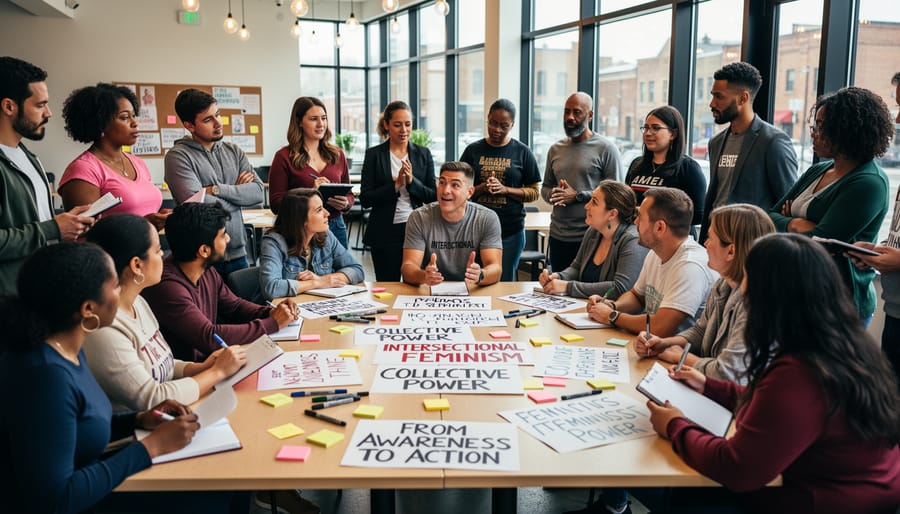
Racism in Canada isn’t just about individual slurs or isolated incidents of hate. It’s a system of power that privileges white people while disadvantaging Indigenous, Black, and other racialized communities through laws, policies, institutions, and everyday practices. While many Canadians imagine racism as overt bigotry that belongs to history or happens elsewhere, the reality is that racism operates quietly and persistently through our schools, hospitals, police forces, courts, and workplaces. It shapes who gets hired, who gets believed, who gets funding, and who gets criminalized.
The difference between personal prejudice and systemic racism matters. Anyone can hold prejudiced views about another group, but racism requires institutional power to enforce those prejudices as reality. In Canada, that power has historically been and remains concentrated in white hands, particularly those of British and French settler descendants. This means a racialized person’s individual bias against white people, while potentially hurtful, cannot become racism because it lacks institutional backing to materially harm white people as a group. Systemic racism, by contrast, creates measurable disparities: Indigenous children removed from families at rates higher than residential school peaks, Black Canadians carded and surveilled disproportionately, Muslim women denied employment for wearing hijab.
To understand how racism works here, we need to grasp these foundational concepts:
- Systemic racism
- Racial discrimination embedded in the normal operations of institutions through policies, practices, and cultural norms that produce unequal outcomes regardless of individual intent. It’s the water we swim in, not just isolated bad actors.
- Settler colonialism
- The ongoing structure through which European settlers displaced Indigenous peoples to claim land and resources, establishing systems that continue to deny Indigenous sovereignty and rights. Canada is a settler colonial state, not a post-colonial one.
- Anti-Black racism
- The specific dehumanization and systemic targeting of Black people rooted in the transatlantic slave trade and continuing through exclusion, criminalization, and violence. In Canada, this includes denying our slavery history and treating anti-Black racism as an American import.
- Anti-Indigenous racism
- Discrimination against First Nations, Métis, and Inuit peoples through policies designed to eliminate Indigenous cultures, languages, and land relationships. It’s foundational to Canada’s existence and persists through child welfare, policing, and resource extraction.
- Islamophobia
- Systemic discrimination targeting Muslims through surveillance, exclusionary policies like Quebec’s Bill 21, and violent hate crimes justified by security narratives. It intensified post-9/11 but draws on longer histories of Orientalism.
Canadian racism operates through a distinctive mythology: that we’re nicer than Americans, that multiculturalism solved discrimination, that our colonial history is regrettable but finished. This national story of progressive tolerance actually insulates racist structures from scrutiny. We compare ourselves favorably to the United States rather than examining our own record of Chinese head taxes, Japanese internment, the continuous functioning of the Indian Act, or the Quebec mosque shooting. The polite veneer makes racism harder to name and challenge, because acknowledging it threatens our collective self-image as the good guys.
How Racism Operates in Canadian Systems
The Myth of Canadian Politeness
Canada’s reputation for politeness isn’t just an innocent stereotype, it’s a smokescreen that lets racism operate under cover of “niceness.” While Americans wrestle publicly with their racial wounds, Canadians congratulate themselves for not being “as bad” as their southern neighbours. This self-satisfied comparison allows systemic racism to flourish precisely because it doesn’t look like the overt hatred many Canadians imagine racism requires.
Polite racism shows up as the hiring manager who “just doesn’t think you’d be a good cultural fit,” the teacher who streams Indigenous students into vocational programs “for their own good,” or the well-meaning white liberal who touches a Black colleague’s hair while complaining about “identity politics.” It’s the policy-makers who express concern about “those communities” while defunding the services they need. The violence feels softer than slurs or crosses burned on lawns, which makes it easier to deny and harder to name.
This veneer of politeness serves a crucial function: it positions anyone who calls out racism as the aggressor, the one disrupting harmony. Racialized Canadians who speak up about discrimination get labeled as divisive, ungrateful, or “playing the race card.” The real harm gets reframed as a misunderstanding, a communication problem, anything but what it actually is.
Canadian exceptionalism, the mythology that we’re multicultural, tolerant, post-racial, makes racism invisible to those who benefit from it while demanding that its targets stay quiet to maintain the national fantasy.
Forms of Racism Across Canadian Communities
Anti-Indigenous Racism and Ongoing Colonialism
Anti-Indigenous racism isn’t a relic of Canada’s past. It’s the foundation this country was built on, and it continues through active policies and structural violence today. Unlike other forms of racism that developed within an existing state, anti-Indigenous racism operates through ongoing settler colonialism, the deliberate dispossession of First Nations, Métis, and Inuit peoples from their lands, governance systems, and cultures.
This racism shows up in concrete ways. The child welfare system apprehends Indigenous children at rates higher than during the residential school era. Drinking water advisories persist for decades in First Nations communities while surrounding municipalities have clean water. Police violence against Indigenous people remains disproportionate and often deadly, yet officers rarely face consequences.
The Missing and Murdered Indigenous Women and Girls crisis exemplifies how anti-Indigenous racism and misogyny compound each other. The National Inquiry’s final report documented how jurisdictional gaps and neglect between federal, provincial, and territorial governments leave Indigenous women and girls vulnerable to violence while denying them protection and justice.
Canada maintains this system through what it doesn’t do as much as what it does. Unresolved land claims stretch for generations. Treaties are ignored when convenient. Reserves remain underfunded by design. The Indian Act continues to dictate who counts as Indigenous and how communities can govern themselves.
Confronting anti-Indigenous racism means recognizing that Canada’s existence depends on Indigenous dispossession, and that reconciliation without land back, without jurisdiction, without reparations is just another colonial story.
Anti-Black Racism in Canadian Institutions

Canada’s relationship with slavery is a convenient fiction many Canadians cling to, the Underground Railroad narrative obscures a brutal truth. Slavery existed in New France and British North America for over 200 years, and that legacy didn’t vanish with abolition. Today, systemic anti-Black racism permeates Canadian institutions in ways that are measurable and devastating.
Black Canadians are disproportionately carded, surveilled, and killed by police. In Toronto, Black people comprise 8.8% of the population but represent over 30% of those shot by police between 2013 and 2017. This isn’t random, it’s structural.
Education systems track Black students into vocational streams while funneling white peers toward university pathways, regardless of ability. Suspensions and expulsions hit Black children at rates far exceeding their representation. The school-to-prison pipeline isn’t an American export, it’s homegrown.
Employment discrimination remains stark. Black job applicants with identical resumes to white counterparts receive significantly fewer callbacks. Once hired, Black workers face wage gaps, glass ceilings, and hostile work environments that white colleagues never navigate.
These aren’t isolated incidents. They’re the deliberate architecture of institutions designed to exclude and extract from Black communities while maintaining Canada’s polite veneer.
Islamophobia and the ‘Terrorist’ Narrative
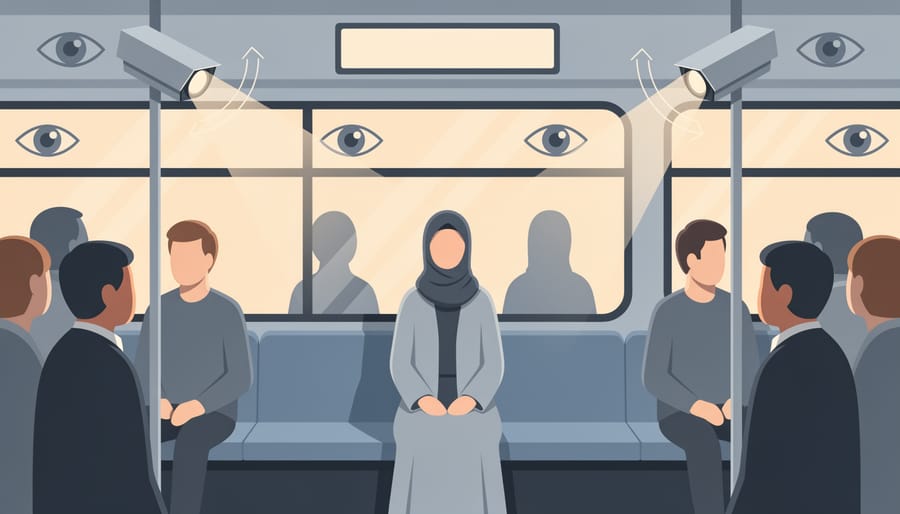
Since September 11, 2001, Muslim communities in Canada have faced a distinct form of racialization that conflates religion with perceived security threats. Islamophobia operates through the “terrorist” narrative, a cultural script that positions Muslims as inherently dangerous, disloyal, and incompatible with Western values. This isn’t just prejudice. It’s embedded in policy, from aggressive border screening to no-fly list errors that disproportionately flag Muslim-sounding names.
Quebec’s Bill 21, banning religious symbols for public servants, exemplifies how secularism becomes a tool for exclusion. While framed as neutral, the law primarily impacts hijab-wearing Muslim women, forcing them to choose between their faith and careers in teaching, law, or government. Similar dress code controversies have erupted across provinces, policing how Muslim women occupy public space.
Surveillance culture compounds these harms. Muslim communities face heightened scrutiny from security agencies, with mosques monitored and community leaders pressured to act as informants. Young Muslims report being questioned about their political views, creating a chilling effect on activism and expression.
This racialization intersects sharply with gender. Muslim women wearing hijab become hypervisible targets for both state discrimination and street-level harassment, experiencing Islamophobia as gendered violence that restricts their movement, employment, and safety in ways Muslim men don’t face identically.
Where Racism and Feminism Collide in Canada
The White Feminism Problem
White feminism in Canada has a long history of claiming to speak for all women while actually centering the experiences and priorities of white, middle-class, able-bodied women. This pattern shows up consistently: from suffrage movements that excluded Indigenous and Black women from voting rights campaigns, to contemporary feminist organizations where racialized women remain token hires rather than decision-makers.
The problem isn’t just historical. Today’s mainstream Canadian feminism still revolves around issues like the corporate glass ceiling and “leaning in” to boardrooms, concerns that reflect white professional women’s realities but ignore the fact that many racialized women are fighting just to access stable employment at all. When white feminists champion reproductive rights, they often skip over how Indigenous women face coerced sterilization and how Black mothers are targeted by child welfare systems. The wage gap gets discussed as a universal women’s issue without acknowledging that racialized women earn significantly less than white women, with Indigenous and Black women facing the steepest penalties.
White feminism also polices how racialized women engage with feminism. Indigenous women who center land sovereignty get told they’re “divisive.” Muslim women who choose to wear hijab face white feminists debating whether they’re truly liberated. Black women’s anger about racist violence gets tone-policed as “not helping the cause.”
This centering of whiteness doesn’t just exclude, it actively harms racialized women by co-opting feminist language to reinforce existing power structures rather than dismantling them.
Intersectionality as a Tool for Justice
Intersectionality gives us language for what many racialized people already knew from living it: oppression doesn’t come in neat, separate boxes. When Kimberlé Crenshaw coined the term in 1989, she described how Black women faced discrimination that was neither simply racism nor simply sexism, but something distinct that existing legal frameworks couldn’t address. In Canada, this framework reveals patterns that single-issue politics miss entirely.
Consider a Muslim woman who wears hijab navigating the job market in Quebec post-Bill 21. She doesn’t experience gender discrimination one day and religious discrimination the next. She faces compounded barriers where Islamophobia, sexism, and xenophobia interact to create unique obstacles that neither white women nor Muslim men encounter in the same way.
Intersectionality helps activists and organizers ask better questions. Instead of “How does racism affect women?” we ask “Which women, in what contexts, facing which specific barriers?” This precision matters for policy. When Ontario’s pay equity legislation passed in the 1980s, it primarily benefited white women because it didn’t account for occupational segregation that concentrated racialized women in unregulated sectors like domestic work and caregiving.
The framework also challenges movement spaces to examine their own exclusions. When climate justice groups center only environmental concerns without addressing how pollution disproportionately impacts Indigenous reserves and low-income racialized neighborhoods, they reproduce the hierarchies they claim to fight. Intersectionality isn’t about ranking oppressions or fragmenting solidarity. It’s about building movements sophisticated enough to address the actual conditions people face, not idealized versions that leave the most vulnerable behind.
Real-World Impacts: From Policy to Daily Life
The intersection of racism and feminism isn’t theoretical, it shapes material realities every single day across Canada. Racialized women earn 59 cents for every dollar earned by white men, with Indigenous women at 57 cents and Black women at 58 cents. These aren’t just numbers; they translate to lifelong economic insecurity, reduced pension contributions, and limited capacity to escape abusive relationships or unsafe housing.
The Missing and Murdered Indigenous Women, Girls, and Two-Spirit people crisis exemplifies state-sanctioned violence at this intersection. Over 4,000 cases documented, yet police routinely dismiss these disappearances as “lifestyle choices” while prioritizing white victims. The 2019 National Inquiry called this genocide, a word that makes many Canadians uncomfortable precisely because it punctures our national mythology. Families still organize their own searches because institutions designed to protect citizens systematically fail Indigenous women.
Reproductive justice reveals how racism compounds gender-based control. Indigenous women in northern communities often lack access to midwifery or birthing centres, forcing them to leave their communities alone during pregnancy. Meanwhile, forced and coerced sterilization of Indigenous women continued into 2019, with documented cases in Saskatchewan and Alberta. Black women face maternal mortality rates three times higher than white women, their pain dismissed by medical professionals who hold racist beliefs about pain tolerance.
The child welfare system functions as modern colonialism. Indigenous children represent 7.7% of the child population but 52.2% of foster care placements. Social workers surveil Indigenous mothers with scrutiny white mothers never experience, applying poverty and cultural differences as evidence of unfitness. This separation repeats residential school trauma across generations, yet politicians frame it as child protection rather than family destruction.
Political representation exposes who gets to shape solutions. As of 2026, racialized women hold roughly 6% of parliamentary seats despite comprising 16% of the population. This matters because policies addressing gender-based violence, pay equity, or immigration are crafted largely without the voices of those most impacted.
Contemporary organizing increasingly centres intersectional analysis. Idle No More connected environmental justice to Indigenous women’s sovereignty. Black Lives Matter Toronto demanded accountability for police violence against Black women and trans people, not just cisgender men. Migrant justice groups led by Filipina and Latina workers exposed how temporary foreign worker programs enable both labour exploitation and gender-based violence with no legal recourse.
These aren’t separate issues requiring separate movements. They’re interconnected systems demanding interconnected resistance.
Common Questions About Racism and Feminism in Canada
The questions people ask about racism and feminism in Canada often reveal exactly where our collective understanding breaks down. These aren’t just innocent curiosities, they’re the fault lines where discomfort meets defensiveness, where good intentions collide with harmful impact.
Is Canada really racist, or is that exaggerated?
Yes, Canada is structurally racist. The data on Indigenous child apprehensions, police killings of Black people, employment discrimination against racialized workers, and ongoing land theft isn’t exaggeration, it’s documentation of systemic harm that Canadian politeness helps obscure.
Why can’t feminism just focus on gender without bringing in race?
Because gender never exists in isolation. A wealthy white woman and a poor Indigenous woman don’t experience “womanhood” the same way, and feminism that ignores this serves only the most privileged women while abandoning everyone else.
What about reverse racism or racism against white people?
Prejudice can exist in any direction, but racism requires systemic power. White people in Canada don’t face institutionalized discrimination in employment, housing, policing, or healthcare based on race, isolated incidents of prejudice aren’t equivalent to centuries of structural oppression.
How can I support racialized feminists without centering myself?
Listen more than you speak, redistribute resources and platforms, follow the leadership of those most affected, and do the uncomfortable internal work of examining your own complicity. Support means action, not performance.
What’s the difference between an ally and an accomplice?
Allies show up when it’s comfortable and safe; accomplices take risks, sacrifice comfort, and actively work to dismantle systems that benefit them. Accomplices understand they’re complicit in oppression until they actively work against it.
The resistance embedded in these questions matters. When someone asks “Is Canada really racist?” they’re often seeking permission to maintain their comfortable narrative about this country. When they ask why feminism needs to address race, they’re defending a version of gender justice that conveniently centers their own experience.
Here’s what these questions typically avoid: How am I participating in these systems? What am I willing to give up? Whose leadership am I following? The shift from asking whether racism exists to asking what you’re doing about it marks the difference between curious bystander and engaged participant in justice work.
The question about reverse racism deserves particular attention because it reveals a fundamental misunderstanding of power. Hurt feelings aren’t systemic oppression. A racialized person’s anger at white supremacy, even when directed at individual white people, doesn’t carry the weight of institutions, policies, and cultural narratives designed to exclude and harm. Equating the two flattens centuries of structural violence into interpersonal dynamics.
And that distinction between ally and accomplice? It’s not semantic. Accomplices understand that dismantling racism and building intersectional feminism requires more than attending rallies or posting solidarity statements. It means interrogating who benefits from your silence, which spaces you occupy that exclude others, and what you’re actively doing to redistribute power rather than simply acknowledge its unequal distribution.
How Racism in Canada Works
Racism in Canada functions through a self-reinforcing cycle that operates across multiple levels simultaneously. It starts with historical policies, the Indian Act, residential schools, racist immigration laws, that created unequal starting points. These foundational harms get encoded into institutions through seemingly neutral rules: funding formulas that starve reserves, hiring practices that screen out “foreign” credentials, algorithms that flag racialized neighborhoods as high-risk.
Cultural narratives then naturalize these disparities. When Indigenous communities lack clean water, the story becomes “poor governance” rather than deliberate federal underfunding. When Black students get suspended at higher rates, schools blame “behavior problems” instead of examining their own disciplinary bias. Media representation amplifies these narratives, recycling images of racialized people as threats, victims, or exotic others while rendering systemic causes invisible.
Individual interactions complete the loop. A landlord “just has a feeling” about a brown applicant. A doctor dismisses a Black woman’s pain as exaggerated. These aren’t isolated prejudices, they’re predictable outcomes of living in a society soaked in racist messaging. Each interaction reinforces institutional patterns, which generate new justifying narratives, which shape the next generation’s “common sense.” The cycle perpetuates because it benefits those with power while being difficult to name or interrupt.
Understanding how racism and feminism intersect isn’t an academic exercise. It’s the prerequisite for building a Canada that actually delivers on its promises of justice and equity. When we treat these systems as separate issues, we perpetuate the very structures that harm racialized women, Indigenous women, and all multiply-marginalized communities most severely.
The tools exist. Intersectional feminist frameworks show us precisely where power concentrates and where harm compounds. The question isn’t whether we understand the problem, racialized and Indigenous feminists have been naming it for generations. The question is whether those of us with privilege will finally listen, follow their leadership, and redistribute the resources and platforms we’ve hoarded.
Performative allyship, the land acknowledgments without land back, the Instagram posts without policy pressure, the diversity panels without structural change, has run its course. In 2026, we need accomplices willing to take risks, cede space, and confront the white supremacist foundations of Canadian institutions. That means supporting Indigenous sovereignty movements, backing campaigns led by Black feminists, funding grassroots organizations run by racialized communities, and challenging racism within our own social circles and workplaces.
Real solidarity looks like showing up consistently, not just during crisis moments. It means recognizing that liberation is collective, that none of us are free until all of us are free. The blueprint for a truly just Canada exists in the work racialized and Indigenous feminists are already doing. Our job is to amplify, resource, and join that work on their terms, not ours. The transformation won’t be comfortable. But it’s long overdue.


