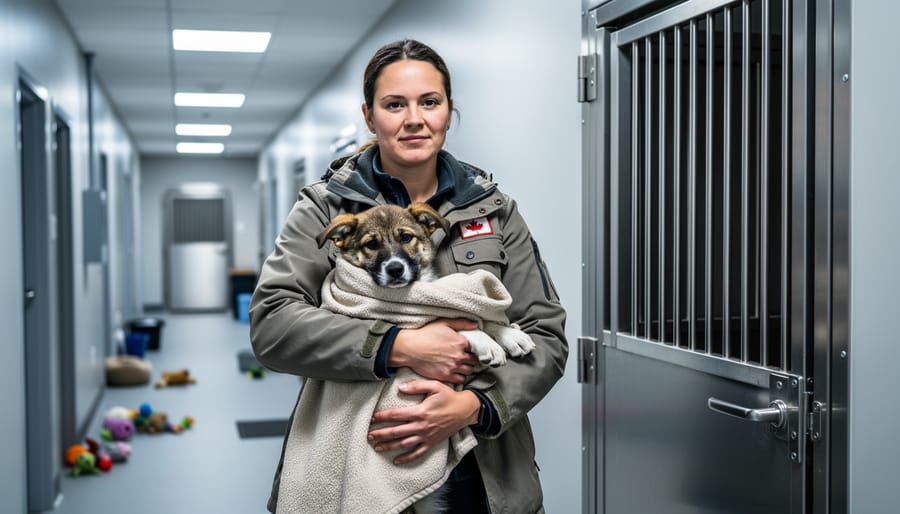
The Organization for the Responsible Care of Animals is a third-party auditing body that sets animal welfare standards for zoos, aquariums, and research facilities across Canada and the United States, yet most Canadians have never heard of it despite the outsized influence it wields over millions of animals in captivity. Founded in the 1990s as a voluntary accreditation program, ORCA positions itself as the gold standard for institutional animal care, but frontline rescue workers and animal rights advocates tell a different story: one where compliance checklists replace genuine welfare, where corporate interests shape standards, and where the gap between certification and actual animal wellbeing grows wider each year.
This matters because ORCA certification carries legal and public relations weight. Facilities can point to their accreditation as proof of ethical operations, securing government funding and public trust even when conditions inside tell a harsher reality. The organization operates in the same regulatory vacuum that allows Canada to position itself as an environmental hero while ignoring systemic failures in its own systems of care.
Talk to anyone who’s pulled an emaciated dog from a breeding facility or spent years fighting to retire a circus elephant, and you’ll hear the same frustration: the standards don’t go far enough, enforcement is inconsistent, and the voices of those doing the actual work of animal rescue are conspicuously absent from policy tables. Indigenous communities, whose relationship with animals predates colonial institutions by millennia, are rarely consulted in these frameworks despite holding knowledge that could transform how we understand responsible care.
Understanding what ORCA is and what it isn’t requires looking beyond the polished mission statements to ask who benefits from the current system and who pays the price.
Understanding the Organization for the Responsible Care of Animals
The Organization for the Responsible Care of Animals doesn’t exist as a single, unified body in Canada. Instead, the phrase refers to a patchwork of industry-led initiatives, certification programs, and compliance frameworks that establish minimum standards for how animals should be treated in commercial settings, farms, research labs, zoos, and shelters. These aren’t government agencies with enforcement power, nor are they grassroots advocacy groups pushing for animal liberation. They’re typically industry associations that develop “codes of practice” meant to demonstrate responsible stewardship while maintaining business operations.
The National Farm Animal Care Council exemplifies this model. It brings together producers, veterinarians, and welfare scientists to create codes covering everything from poultry housing to transport protocols. Participation is voluntary, though many retailers now require compliance from suppliers. Similarly, the Canadian Council on Animal Care oversees research facility standards, while Humane Canada publishes Canadian shelter standards that guide municipal and private rescue operations.
What unites these various frameworks is their philosophical foundation: animals deserve humane treatment, but human use of animals for food, research, entertainment, and companionship remains acceptable. This welfare approach contrasts sharply with rights-based advocacy that questions whether we should be using animals at all. The organizations developing care standards operate within a paradigm where a dairy cow’s comfort matters, but her right to bodily autonomy doesn’t enter the conversation.
Critics argue this creates a troubling dynamic where industries effectively self-regulate through carefully branded “responsibility” programs that forestall stronger legal protections. Defenders counter that practical improvements happen faster through collaborative standard-setting than through confrontational activism. Either way, understanding that no single Organization for the Responsible Care of Animals exists helps clarify why animal welfare remains fragmented across sectors, species, and provinces.
The Gap Between Animal Care Standards and Animal Rights

What ‘Responsible Care’ Actually Means in Practice
When farms, laboratories, and commercial facilities claim to follow “responsible care” standards, what does that actually look like behind closed doors? The answer depends entirely on who’s writing the rules and who’s checking compliance.
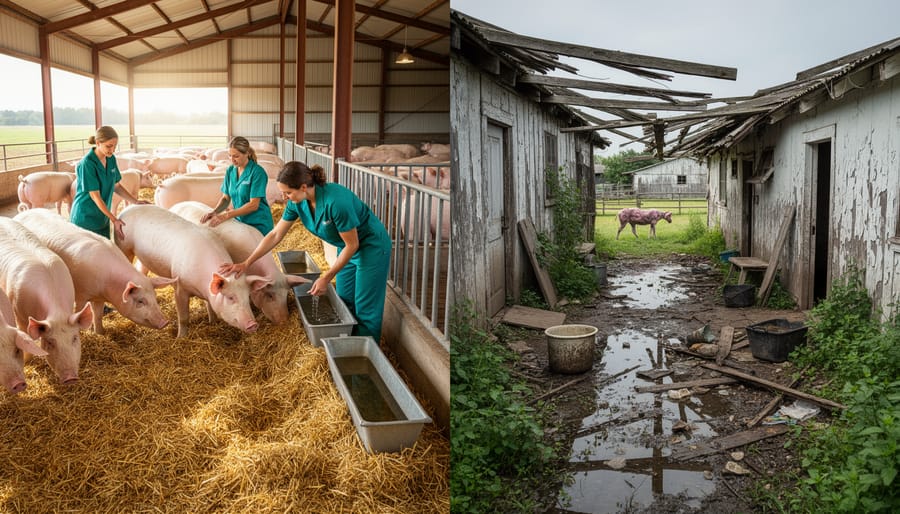
In Canadian agriculture, responsible care typically means meeting minimum provincial animal welfare codes. A dairy cow might have “adequate” space, legally speaking, in a stall barely larger than her body. Breeding sows in some provinces still spend their pregnancies in gestation crates where they can’t turn around. Both scenarios meet official care standards. Industry representatives call this responsible management. Animal welfare scientists increasingly call it incompatible with animal wellbeing.
Research facilities present their own contradictions. Animals used in experiments must receive “humane care” under Canadian Council on Animal Care guidelines, yet those same guidelines permit procedures most Canadians would find disturbing if they saw them. Pain relief remains optional for many protocols. Psychological distress doesn’t factor into most compliance checks.
The enforcement gap matters more than the rules themselves. Inspections are infrequent, often announced in advance, and conducted by people with industry ties. When violations surface, penalties rarely extend beyond warning letters. A 2024 investigation found that facilities could fail multiple inspections yet continue operating without meaningful consequences.
This isn’t hypothetical. Undercover footage from “compliant” facilities regularly contradicts official assurances. The standards aren’t protecting animals, they’re protecting institutions from accountability while maintaining a veneer of responsibility that keeps the public comfortable.
Voices from the Front Lines
Every weekend, Sarah Chen drives three hours from her Toronto sanctuary to rural Ontario farms, collecting animals that standard care protocols deemed “adequately housed.” She’s blunt about the gap: “A cow can meet every welfare checklist, food, water, shelter, and still be profoundly suffering. The standards measure survival, not thriving.”
This disconnect appears repeatedly across Canada’s rescue network. Operators describe arriving at facilities with perfect paperwork and finding animals psychologically broken from isolation, physically compromised from restricted movement, or simply existing in conditions no compassionate person would call humane.
“We’re not just fixing individual cruelty cases anymore. We’re cleaning up after systems that treat sentient beings like production units with minimum-maintenance requirements.”
Indigenous-led initiatives offer sharper critique. Several First Nations communities running animal programs emphasize relational responsibility over checklist compliance, the idea that care means understanding an animal’s place in a broader ecological and spiritual web, not just meeting industrial baselines. They point out that colonial frameworks reduced animals to property first, then developed “humane” standards that never questioned that fundamental designation.
What these front-line voices share is impatience with incremental improvements to fundamentally extractive systems. They’re not asking for better cages; they’re questioning why we’re still building them.
Canada’s Animal Rescue Landscape in 2026
Regional Challenges and Indigenous Leadership
Animal welfare in Canada is not one story, it’s a patchwork of regional realities shaped by geography, resources, and political will. In British Columbia, overcrowded urban shelters grapple with expensive veterinary care and housing crises that force people to surrender pets. The Prairies face rural isolation, where distances between veterinary clinics can span hundreds of kilometres and rescue groups operate on shoestring budgets. The territories confront unique challenges: extreme weather, limited infrastructure, and communities where traditional relationships with animals don’t map neatly onto southern regulatory frameworks.
What mainstream animal welfare organizations often miss, and what makes this particularly relevant to Indigenous rights conversations, is that many First Nations, Inuit, and Métis communities have developed care models rooted in stewardship rather than ownership. These approaches recognize animals as kin and teachers, not property to be managed. Indigenous-led initiatives like community-driven spay/neuter programs in remote fly-in communities, or youth programs teaching traditional knowledge alongside humane treatment, operate outside the colonial welfare-versus-rights binary. They prioritize relationships and responsibility over bureaucratic compliance.
Yet these programs receive a fraction of the funding flowing to southern rescue operations. When institutional frameworks ignore place-based knowledge and impose one-size-fits-all standards, they replicate the same paternalism that has harmed Indigenous communities for generations. Genuine animal welfare in Canada means supporting models that emerge from the communities doing the work, not just measuring them against urban assumptions.
Funding, Burnout, and Systemic Barriers

Most Canadian animal rescue organizations operate on financial fumes, held together by volunteers who work second jobs to fund their advocacy. A 2025 survey of Ontario rescues found that 78% had no paid staff and relied entirely on personal credit cards and fundraising drives to cover emergency veterinary bills. The crisis intensifies in rural and northern regions, where a single rescue might serve an area larger than some European countries with an annual budget under $15,000.
Current regulatory frameworks compound these challenges rather than easing them. Charitable status requirements often exclude grassroots rescues that focus on direct action or advocacy work deemed “too political.” Organizations serving predominantly Indigenous communities face additional barriers, as existing animal welfare regulations were designed without input from First Nations and frequently conflict with traditional animal care practices. This intersection of systemic underfunding and cultural exclusion mirrors broader patterns of racism in Canada that determine which communities receive resources and recognition.
The burnout rate among rescue workers is staggering. Advocates report spending 60-hour weeks responding to cruelty cases, transporting animals, and navigating bureaucratic requirements that seem designed to exhaust rather than assist. Provincial regulations mandate detailed record-keeping and facility standards that drain limited funds toward compliance paperwork instead of animal care. Meanwhile, commercial breeding operations face minimal oversight despite generating the abandonment and neglect that rescues must address.
This resource crisis isn’t accidental. It reflects policy choices that treat animal rescue as charity work rather than essential community infrastructure deserving systematic public support.
What Activists Are Demanding Now
Canadian animal rights activists aren’t asking for minor tweaks to existing frameworks, they’re demanding a complete rethinking of how the legal system treats animals. At the centre of current advocacy is the push to recognize animals as sentient beings with inherent rights, not merely as property or resources to be “responsibly managed.”
The most urgent priority right now is ending the exemptions that allow standard agricultural practices to escape animal cruelty laws. Activists point out that behaviours illegal if done to a dog, confinement, mutilation without pain relief, selective breeding that causes suffering, remain perfectly legal on farms because they’re considered “normal industry practice.” Groups like Animal Justice are pushing for federal legislation that would close these loopholes and establish baseline protections that apply regardless of an animal’s commercial value.
Beyond legal reform, there’s growing momentum for recognizing animal autonomy in ways that go far beyond welfare standards. This means questioning practices that many Canadians take for granted: using animals in entertainment, breeding them for specific traits that compromise their health, and treating wildlife as expendable when they conflict with human interests. Younger activists especially are rejecting the idea that humane treatment is enough if the underlying relationship is still exploitative.
Indigenous-led movements are contributing crucial perspectives here, emphasizing reciprocity and kinship rather than stewardship or dominion. These frameworks challenge colonial approaches to animal care that separate humans from the rest of the natural world and reduce animals to resources needing responsible management.
Current campaigns are also targeting transparency. Activists want mandatory public reporting from facilities that use animals, real enforcement mechanisms with teeth, and an end to ag-gag laws that criminalize undercover documentation of animal suffering. They’re arguing that if an industry’s standard practices can’t withstand public scrutiny, those practices need to change, not the laws protecting whistleblowers.
This isn’t about asking organizations like ORCA to do better within existing parameters. It’s about questioning whether those parameters should exist at all.
How You Can Support Meaningful Change
Supporting animal welfare means directing your energy toward organizations that challenge existing systems, not just maintain them. Here’s how to make your involvement count.
1. Fund grassroots rescues and sanctuaries directly. Skip the large charities with marketing budgets and find local rescues through provincial animal welfare networks. Monthly donations of $20 to $50 provide stable operating budgets that pay for veterinary care, emergency interventions, and infrastructure. Ask organizations what percentage of donations goes directly to animal care versus administration.
2. Volunteer your specific skills. Rescues need more than people to walk dogs. Offer accounting, legal advice, social media management, carpentry for shelter repairs, or fostering space. If you have a truck, transport animals between facilities. Time commitments of even four hours monthly make tangible differences.
3. Amplify Indigenous-led animal care initiatives. Many First Nations communities operate animal welfare programs addressing unique challenges in remote areas. Share their fundraising campaigns, purchase from Indigenous-owned businesses that donate to these causes, and support calls for federal funding that respects community sovereignty over animal care approaches.
4. Push your elected representatives on specific policy changes. Contact MPs and MLAs demanding stronger legal protections for animals, increased penalties for abuse, and funding for spay/neuter programs. Reference successful legislation in other provinces. Track their voting records on animal welfare bills the same way you would on climate policy or LGBTQ rights.
5. Change your consumption patterns strategically. Reducing animal product consumption directly decreases demand for industrial farming systems. But don’t stop there: support farmers transitioning to higher-welfare practices, buy from businesses with transparent supply chains, and vocally oppose ag-gag laws that criminalize whistleblowers exposing abuse.
Hold organizations accountable by asking hard questions about their actual impact, not just their mission statements.
Common Questions About Animal Care Organizations and Rights in Canada
What’s the real difference between animal welfare and animal rights?
Animal welfare accepts that humans can use animals but advocates for humane treatment and minimizing suffering within existing systems. Animal rights challenges the fundamental premise that humans have the right to use animals at all, arguing for recognition of animals as beings with inherent rights to autonomy and freedom from exploitation.
How can I tell if an organization actually helps animals or just protects industry interests?
Look at their funding sources, their board composition, and whether they push for minimum compliance standards or transformative change. Organizations funded primarily by industries they’re supposed to regulate often prioritize business viability over animal welfare, while grassroots groups typically operate on donations and advocate for systemic reforms.
Do animals have legal rights in Canada?
Not in any meaningful sense. Canadian law still classifies animals as property, though some provinces have strengthened protections against cruelty. Federal jurisdiction covers areas like transport and international trade, while provinces handle most animal welfare legislation, creating a patchwork of inconsistent protections across the country.
What legal protections changed recently?
Some provinces strengthened enforcement mechanisms and increased penalties for animal cruelty, but these remain incremental adjustments within a property-based framework. For broader context on shifts in rights frameworks, including Indigenous rights developments that inform alternative approaches to animal care, check what changed in 2026.
The tension between asking the right questions and getting satisfying answers reveals how far Canada still has to go. Most people want to support animal welfare but get stuck navigating a landscape where organizations use similar language while pursuing fundamentally different goals. The distinction matters because your support, whether through donations or advocacy, shapes which vision of animal care gains ground.
The comfortable language of “responsible care” has long served as a buffer between the reality of animal exploitation and our collective discomfort with it. These institutional frameworks weren’t designed to challenge the systems that profit from animal use, they exist to make those systems more palatable, to reassure the public that someone’s watching, that standards are being met. But standards set by industries rarely threaten industry interests.
Real change has never come from compliance checklists. It comes from people willing to name exploitation for what it is, from rescue workers who see the failures of these frameworks every single day, from Indigenous communities offering models rooted in reciprocity rather than dominion. The activists demanding more than incremental improvements aren’t being unreasonable, they’re refusing to pretend that minor reforms equal justice.
If you’ve read this far, you already know something feels incomplete about how we treat animals in this country. The question isn’t whether the Organization for the Responsible Care of Animals or similar bodies have a role to play. It’s whether we’re brave enough to support the people and organizations demanding transformation instead of just better management of the status quo.
Progress means getting uncomfortable with compromises we’ve accepted for too long. It means directing resources, attention, and political pressure toward groups that won’t settle for welfare tweaks when rights are what’s required.