Canada offers some of the most comprehensive legal protections for 2SLGBTQI+ people in the world, but knowing your rights and how to enforce them is where theory meets lived experience. Since 1996, federal law has explicitly prohibited discrimination based on sexual orientation, and courts have extended Charter protections to gender identity and expression. If you face discrimination in employment, housing, or services under federal jurisdiction, you can file a complaint with the Canadian Human Rights Commission at no cost. Provincial human rights codes mirror many of these protections, though coverage and enforcement vary.
The gap between legal protection and daily reality remains wide for many queer and trans Canadians, especially those who are racialized, Indigenous, disabled, or living outside major urban centers. While marriage equality arrived in 2005 and gender marker changes are now possible on federal documents, systemic barriers persist in healthcare access, youth homelessness, and violence prevention. The Federal 2SLGBTQI+ Action Plan, launched in 2022 with $100 million over five years, directs three-quarters of its funding straight to community organizations, a recognition that policy without resources is just rhetoric.
Understanding what protections exist, who enforces them, and how to access support when those protections fail is essential whether you’re asserting your own rights, supporting someone navigating discrimination, or pushing institutions to meet their legal obligations. This guide breaks down federal and provincial frameworks, walks through complaint processes, clarifies what remedies you can pursue, and connects you to the community-led organizations doing the work that governments alone cannot.
What LGBTQ Rights Are Protected in Canada
Constitutional Protection Under the Charter
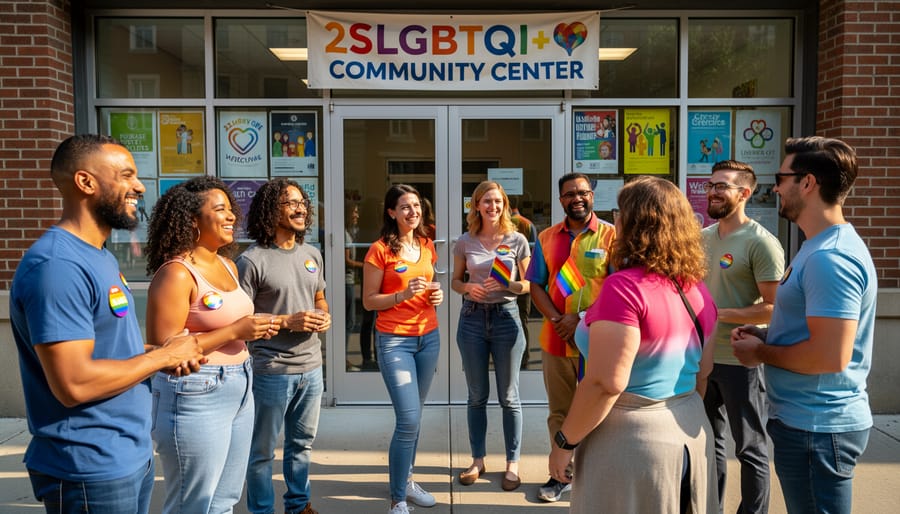
Section 15 of the Canadian Charter of Rights and Freedoms guarantees equality before and under the law, listing specific protected grounds: religion, race, national or ethnic origin, colour, sex, age, and physical or mental disability. Notably absent from that list is sexual orientation. Yet in practice, 2SLGBTQI+ Canadians are protected from discrimination under the Charter, thanks to a landmark 1995 Supreme Court decision that refused to treat the text as exhaustive.
In Egan v. Canada, the Supreme Court ruled that sexual orientation qualifies as an “analogous ground” under section 15, even though it isn’t explicitly named. The case involved a gay couple challenging the exclusion of same-sex partners from spousal benefits. While the Court ultimately upheld the law at issue, it unanimously affirmed that discrimination based on sexual orientation violates the Charter’s equality guarantee. This concept of analogous grounds means the Charter evolves with society’s understanding of who faces systemic discrimination, rather than freezing protection to the groups named in 1982.
The Egan decision was a watershed. It transformed the Charter from a static list into a living framework that recognizes LGBTQ Canadians as a protected class, giving courts the authority to strike down discriminatory laws and policies across every level of government. Without that ruling, much of the progress since, marriage equality, adoption rights, inclusive healthcare, would have been far harder to secure.
Federal and Provincial Human Rights Legislation
Quebec broke new ground in 1977 when it Quebec amended its charter to explicitly prohibit discrimination based on sexual orientation, the first Canadian jurisdiction to do so. That move set a precedent that took nearly two decades to reach federal law. In 1996, Parliament finally amended the Canadian Human Rights Act to add sexual orientation as a protected ground, closing a gap that had left 2SLGBTQI+ people vulnerable to discrimination in federally regulated workplaces, housing, and services.
These laws work in practice by giving individuals a legal avenue to challenge discrimination. If you’re denied an apartment, fired from a job, or refused service because of your sexual orientation or gender identity, you can file a complaint with the relevant human rights commission. The commission investigates, and if it finds merit, can order remedies ranging from financial compensation to policy changes that prevent future harm. Every province and territory now has similar protections in place, though the specific grounds and processes vary. The federal act covers banks, airlines, telecommunications companies, and other federally regulated sectors, while provincial codes handle most employment, housing, and public accommodations. Together, they create a layered safety net that turns constitutional principles into enforceable rights.
Who Can Access Federal 2SLGBTQI+ Support Programs
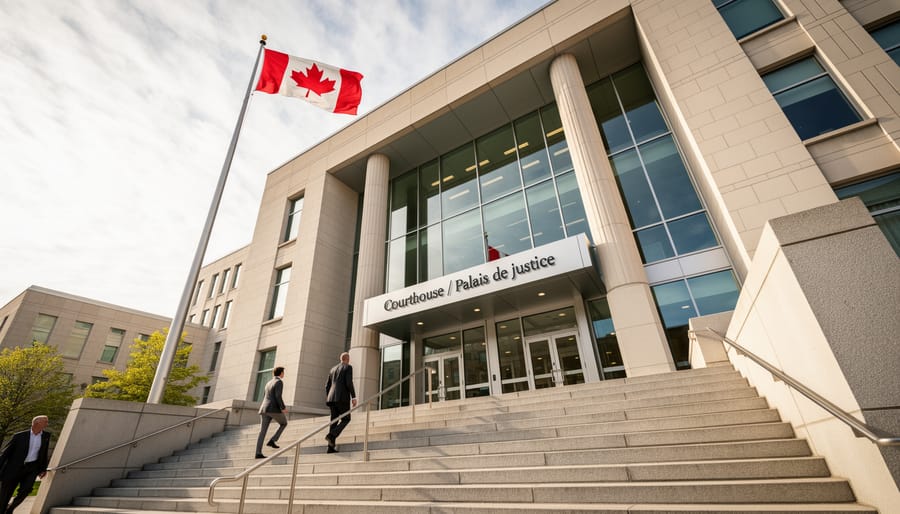
Canada’s Federal 2SLGBTQI+ Action Plan represents a $100 million investment over five years (2022-2027), and its structure deliberately pushes resources to where they matter most. Up to 75% to communities means the majority of funding flows directly to 2SLGBTQI+ organizations and grassroots groups rather than disappearing into federal administration. Led by Women and Gender Equality Canada (WAGE), the plan targets specific gaps in support and representation that community advocates have identified for years.
Who qualifies? The plan prioritizes community-based organizations that are led by and serve 2SLGBTQI+ people, especially those working with populations that face compounded barriers, Two-Spirit people, trans and non-binary folks, racialized community members, people with disabilities, youth, and elders. Grassroots groups without massive budgets or established government relationships can apply, which is a departure from funding models that favor larger, more bureaucratic nonprofits. Individuals don’t apply directly for cash grants, but they access services and programs delivered by funded organizations, from mental health support to legal clinics to cultural initiatives.
The 2SLGBTQI+ Action Plan details six priority areas that shape which projects get funded:
- Supporting 2SLGBTQI+ communities, capacity-building, leadership development, and direct services
- Advancing the rights of 2SLGBTQI+ people, legal advocacy, policy reform, and human rights work
- Protecting 2SLGBTQI+ people from hate and violence, safety programs, crisis response, and anti-violence education
- Addressing the specific needs of diverse 2SLGBTQI+ communities, intersectional programs for Indigenous, racialized, disabled, and rural populations
- Improving data collection, research and monitoring to track outcomes and identify ongoing gaps
- International advocacy, supporting LGBTQI+ rights globally and assisting those fleeing persecution
Organizations applying for funding need to demonstrate that their work aligns with at least one of these areas and that their leadership reflects the communities they serve. WAGE reviews applications based on impact, community need, and the organization’s track record or potential. Because the plan runs through 2027, it’s structured as multi-year support rather than one-off grants, which allows organizations to plan longer-term projects instead of scrambling for annual renewals.
This isn’t charity, it’s recognition that systemic equity requires sustained investment in community infrastructure. The best legal protections in the world mean little if people can’t access knowledgeable support, legal aid, or culturally competent services when they face discrimination or violence.
How to Access Support and Assert Your Rights
Filing a Human Rights Complaint
If you face discrimination based on sexual orientation or gender identity, filing a human rights complaint gives you a formal path to remedy. The process depends on where the discrimination occurred and who was responsible.
For federally regulated workplaces, banks, airlines, telecommunications, interprovincial transport, you file with the Canadian Human Rights Commission. If the discrimination happened in provincially regulated areas like retail, restaurants, housing, or most private employers, you go through your provincial or territorial human rights tribunal. Each province has its own commission with similar processes but different timelines.
Start by documenting everything. Keep emails, text messages, witness names, dates, and descriptions of what happened. Note any policies that were applied unfairly or any direct statements made. The stronger your evidence, the more likely your complaint moves forward. Most commissions require you to file within one year of the discriminatory act, though some provinces allow longer.
Once you file, the commission investigates. They may attempt mediation first, bringing both parties together to resolve the matter without a hearing. If mediation fails or isn’t appropriate, the case proceeds to a tribunal hearing where both sides present evidence. This can take months or even years, depending on the commission’s backlog.
Remedies vary but often include monetary compensation for lost wages or emotional distress, orders requiring the employer or service provider to change policies, mandatory training, or public interest remedies that benefit the broader 2SLGBTQI+ community. Complaints involving racialized barriers may address intersecting discrimination, strengthening the case for systemic change.
You don’t need a lawyer to file, though legal aid societies and community legal clinics often provide free support. Many human rights commissions offer guides and intake workers who walk you through each step.
Applying for Community Funding and Resources
The Federal 2SLGBTQI+ Action Plan routes funding through Women and Gender Equality Canada, prioritizing projects that address gaps in support and center the leadership of 2SLGBTQI+ people themselves. Community organizations, grassroots collectives, and nonprofits can apply for grants to fund a range of initiatives: mental health programs, legal clinics, youth drop-in centers, cultural events, advocacy campaigns, and research projects that document lived experiences. The Action Plan emphasizes intersectional approaches, meaning projects serving Indigenous Two-Spirit people, racialized queer folks, trans youth, or disabled 2SLGBTQI+ Canadians often receive priority consideration.
To apply, organizations typically navigate WAGE’s online portal, where funding opportunities are posted with eligibility criteria, project timelines, and reporting requirements. Most calls for proposals require a detailed project plan, a budget breakdown, and evidence of community consultation, proof that the people you aim to serve helped shape the work. Smaller grassroots groups without established nonprofit status can sometimes partner with larger organizations to access funding, ensuring that community-led initiatives aren’t shut out by administrative barriers. Check WAGE’s website regularly for updated calls, and don’t hesitate to reach out to program officers with questions before submitting.
Your Rights and Responsibilities as a 2SLGBTQI+ Person in Canada

As a 2SLGBTQI+ person in Canada, you’re entitled to equal treatment under the Charter of Rights and Freedoms and federal human rights law. That means freedom from discrimination in employment, housing, services, and public accommodations based on your sexual orientation or gender identity. You have the right to access gender-affirming healthcare, to have your relationships legally recognized, and to change your gender marker and name on official documents without unnecessary barriers. These protections apply across federally regulated sectors and, through provincial human rights codes, in most areas of daily life.
Your responsibilities under this framework are straightforward: respect others’ rights in the same way you expect yours to be respected, and engage honestly in legal processes if you seek remedy for discrimination. That means filing complaints in good faith, providing accurate information, and following through with tribunals or commissions when you pursue justice. It also means understanding that rights come with the duty to use them, staying informed, calling out discrimination when you see it, and supporting community efforts to close the gaps that still exist.
Because the law doesn’t protect everyone equally in practice. Trans and Two-Spirit people still face systemic barriers to ID changes, healthcare access, and safety that cisgender LGB Canadians largely don’t encounter. Indigenous 2SLGBTQI+ people navigate both colonial legal systems and the ongoing impacts of Indigenous rights changes that don’t always account for gender and sexual diversity. Racialized queer and trans folks experience discrimination that’s both homophobic and racist, and the legal system often fails to recognize or address that intersection. Disabled 2SLGBTQI+ people may be denied the accommodations they need to access services or assert their rights in the first place.
Your entitlements are only as strong as your ability to enforce them. That means knowing what protections exist, where to file complaints, and how to access community resources when institutions fail you. It also means recognizing that legal rights alone don’t create lived equity, that takes collective action, mutual aid, and a willingness to keep pushing for the people the system still leaves behind.
Where to Get Help: Organizations, Legal Aid, and Community Resources
Knowing your rights means little if you can’t find support when you need it. Canada has a robust network of organizations dedicated to 2SLGBTQI+ people, but navigating that landscape requires knowing where to look and which groups center community leadership over institutional priorities.
Start with national organizations that offer direct support and advocacy. Egale Canada provides legal information, policy analysis, and education programs rooted in community experience. Rainbow Railroad helps 2SLGBTQI+ people escape state-sponsored violence through relocation and emergency travel support. Trans Lifeline operates a peer-run crisis hotline staffed entirely by trans people, offering immediate support without the police involvement that many crisis lines trigger automatically. These organizations exist because mainstream services often fail queer and trans people, particularly those from racialized, Indigenous, or disabled backgrounds.
| Type of Support | National Organizations | What They Offer |
|---|---|---|
| Legal aid | Egale Canada, provincial legal aid societies | Human rights complaint guidance, charter challenge support, referrals to 2SLGBTQI+-affirming lawyers |
| Crisis support | Trans Lifeline, LGBT Youthline, Kids Help Phone | Immediate peer support, suicide prevention, de-escalation without police involvement |
| Community organizing | Local Pride centers, grassroots mutual aid networks | Safer spaces, peer programs, direct material support, event organizing |
| Immigration/refugee services | Rainbow Railroad, Rainbow Refugee Committee | Emergency relocation, sponsorship coordination, settlement support |
Provincial human rights commissions handle discrimination complaints and often publish guides specific to your region. Every province and territory has one. Legal aid societies vary widely in what they cover, but many now have dedicated 2SLGBTQI+ intake workers who understand the specific barriers queer and trans people face in housing, employment, and family law disputes.
The most responsive support often comes from local Pride centers and grassroots groups run by and for 2SLGBTQI+ and Indigenous communities. These spaces provide drop-in programming, peer counseling, material aid like clothing banks and harm reduction supplies, and crucially, they operate outside the surveillance and gatekeeping of government agencies. Seek out organizations led by people who share your identity and experience, especially if you’re trans, racialized, newcomer, or dealing with intersecting barriers. Community-led means decisions are made by the people most affected, not by well-meaning allies or institutional bureaucrats.
If formal organizations feel inaccessible or unsafe, mutual aid networks offer another path. These informal collectives redistribute resources directly, from emergency housing funds to legal expense crowdfunding, without the forms and eligibility requirements that exclude so many. Ask around at local events, check social media for regional groups, and trust grassroots organizing over top-down charity models. Real support flows from shared struggle, not institutional benevolence.
Common Questions About LGBTQ Rights in Canada
When did Canada decriminalize same-sex activity?
Canada took its first legislative step toward LGBTQ equality in 1969, when Parliament passed an omnibus bill decriminalizing private sexual acts between two people over the age of 21. That groundbreaking moment, then-Justice Minister Pierre Trudeau famously declared “there’s no place for the state in the bedrooms of the nation”, removed criminal penalties but didn’t immediately grant full civil rights. Quebec blazed the trail on anti-discrimination protections in 1977, becoming the first jurisdiction in Canada to amend its provincial human rights charter to include sexual orientation. The federal government followed nearly two decades later: in 1996, the Canadian Human Rights Act was amended to explicitly prohibit discrimination based on sexual orientation, and by 1995 the Supreme Court had already ruled in Egan v. Canada that sexual orientation is protected under section 15 of the Charter of Rights and Freedoms, even though it’s not explicitly listed.
Are conversion therapy practices banned in Canada?
Yes. Canada’s federal conversion therapy ban came into effect in 2022, making it a criminal offence to provide, advertise, or profit from conversion therapy for anyone, regardless of age. The law also prohibits forcibly taking a Canadian abroad for conversion therapy.
What protections exist for trans youth in Canada?
Trans youth are protected under the same federal and provincial human rights laws that prohibit discrimination based on gender identity and expression. They have the right to access gender-affirming healthcare, use facilities that match their identity, and be addressed by their chosen name and pronouns in schools and public spaces, though implementation varies by province.
How do I change my gender marker on official documents?
The process varies by province and document type. Most provinces now allow you to change your gender marker on birth certificates and driver’s licences without requiring surgery, though some still mandate a physician’s letter. Federal documents like passports allow you to choose X as a gender marker and don’t require medical documentation.
The answers to these questions matter because legal protections mean nothing without enforcement and policy accountability. Knowing your rights is step one; understanding how to assert them and where to turn when systems fail you is what transforms paper promises into lived equality. If your question isn’t answered here, contact a local 2SLGBTQI+ organization or provincial human rights commission, they exist precisely to help you navigate these systems and push back when institutions fall short.
Canada’s legal protections for 2SLGBTQI+ people are among the strongest in the world, a testament to decades of courageous activism and hard-won victories. But laws on paper mean nothing without the political will to enforce them and the community power to defend them. Every gain we celebrate today exists because people refused to accept inequality, and every protection we rely on tomorrow depends on our vigilance now.
The fight for true equity doesn’t end with legislation. It lives in the community organizations doing the daily work of support and advocacy, in the grassroots movements pushing back against discrimination, and in every individual who refuses to stay silent when rights are threatened. Support 2SLGBTQI+-led organizations. Challenge your representatives when they fall short of their promises. Show up for the most marginalized members of our community, because liberation is collective or it’s nothing.
Canada’s framework is strong, but frameworks don’t protect people, we do. Stay informed, stay loud, and keep pushing. The work continues, and it needs you.