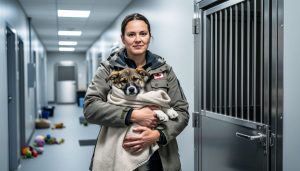
A Canadian animal shelter is any organization that takes in lost, surrendered or abandoned animals, houses them, and works to get them home or into a new one. That’s the simple answer. The reality is messier. There’s no single national system, so what happens to an animal depends heavily on your postal code, your municipality’s bylaws, and whether a local humane society, a city-run pound or a volunteer-driven rescue is doing the work.
If you want to adopt, surrender a pet, volunteer or donate, the first move is the same: find out who actually operates the shelter nearest you and how it’s funded. Some are municipal services. Others are registered charities running on donations and exhausted staff. Many are somewhere in between, and the difference shapes everything from adoption fees to how long an animal gets before a decision is made about its future.
It also shapes who gets left out. People in remote and Indigenous communities often have no shelter within hundreds of kilometres. Renters get turned away by landlords who won’t allow pets. Someone fleeing an abusive partner may stay in danger because no safe place will take their dog. Animal welfare in Canada isn’t a cute side story. It’s a justice issue, tangled up with housing, poverty and access. Here’s how the system works, and how you can change it.
How Canada’s Animal Shelter System Actually Works
A Patchwork, Not a System
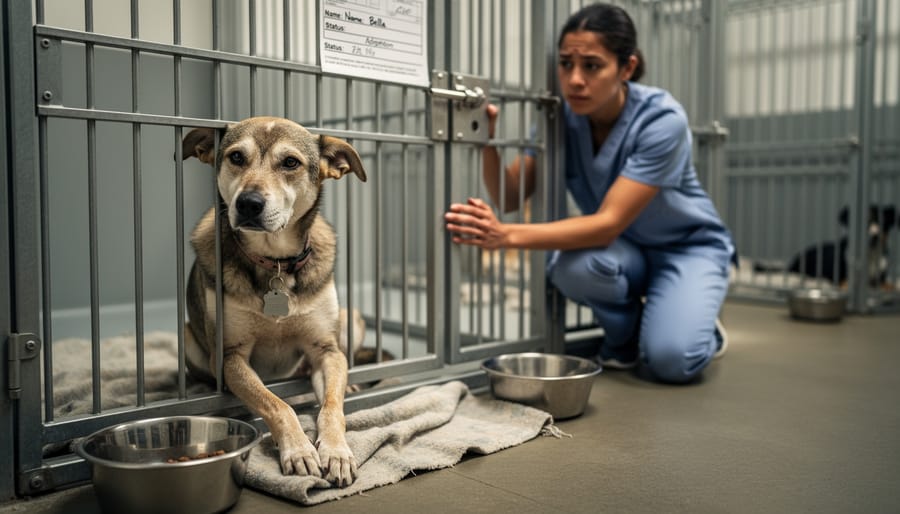
Ask who runs “the shelter” in your town and you might get three different answers. Canada has no single national shelter system. Responsibility is stitched together across cities, provinces and nonprofits, and the seams show.
Cities usually handle animal control and by-law enforcement, sometimes running a pound themselves and sometimes contracting that job out. Animal cruelty investigations often fall to provincial bodies, and the rules they enforce come from provincial and territorial animal welfare laws which differ from one jurisdiction to the next. Nonprofits fill whatever gaps remain.
- Municipal shelter
- A city-run or city-contracted facility, typically handling strays and animal control.
- Humane society/SPCA
- A charitable organization that shelters animals and, in some provinces, enforces cruelty laws.
- Foster-based rescue
- A volunteer group that places animals in private homes instead of a building.
- Open-admission vs. limited-admission
- Open-admission shelters accept every animal; limited-admission groups choose based on space and resources.
- TNR (trap-neuter-return)
- A method of sterilizing community cats and returning them to where they were found.
Money explains much of the variation. A shelter on a municipal contract has steady but capped funding. One that depends on donations and galas rides the economy and the generosity of its neighbours. Rural groups, often run by a handful of volunteers, have the least to work with. So an animal’s chances can hinge on postal code as much as on temperament.
Shelter vs. Rescue: Why the Difference Matters
Walk into a municipal shelter and an independent rescue on the same afternoon, and you’re stepping into two very different promises. An open-admission shelter takes in the animals nobody else will: strays, owner surrenders, sick, injured, aggressive, elderly. It can’t turn the door shut when kennels fill up. A selective-intake rescue chooses which animals it accepts, often based on space in foster homes, medical budget, or temperament. Neither is inherently better. They’re built to do different jobs.
That difference shapes everything else. Open-admission shelters absorb the hardest cases, so they’re often the ones facing painful decisions about euthanasia when capacity runs out. Rescues can sidestep that pressure by limiting intake, but it means the difficult animals go somewhere else, usually to the very shelters being judged more harshly.
Transparency varies too. Registered charities must file public information, and some shelters publish intake and outcome numbers, but many small groups don’t. Adoption processes also diverge: shelters tend to move animals faster, while rescues may require home visits, references, or long applications that can quietly shut out renters and lower-income applicants.
So before you donate or adopt, ask direct questions. Who do you take in, and who do you turn away? What happens to animals you can’t place? Honest groups will answer plainly.
The Law Says Animals Matter. Does It Say Enough?

Property or Sentient Being?
Ask a lawyer what a dog is under Canadian law and you’ll get an answer that stings: in most legal settings, animals are classified as property. A beloved rescue mutt sits in the same legal category as a couch. That framing quietly shapes everything downstream.
Two philosophies pull in different directions here. Animal welfare accepts that humans use animals but insists we treat them humanely, which is the logic behind most cruelty statutes. Animal rights goes further and argues that animals are sentient beings with interests of their own, not resources to be managed. Most Canadian law sits firmly in the welfare camp, and so does most shelter funding.
Why does that matter for the shelter down your street? Because property thinking treats animal care as a charitable extra instead of a public responsibility. Municipal contracts stay thin, standards vary, and donations plug the gaps. It also muddies questions like the right to rescue where a rescuer’s compassion can collide with an owner’s property claim.
I’d argue sentience deserves legal weight. Treating animals as feeling beings would push governments to fund their care as a basic public good, not a bake-sale afterthought.
Enforcement Gaps and Who Pays the Price
When a cruelty complaint comes in, someone has to answer it. In many parts of Canada, that someone is a small team stretched across a huge territory, or a shelter that was never funded to investigate anything. Enforcement of animal protection laws often falls to provincial SPCAs, humane societies and municipal officers, and their resources and powers vary wildly from one region to the next. The same neglect case might trigger a swift seizure in one jurisdiction and a months-long wait in another.
Shelters absorb the fallout. Once animals are seized, someone has to house, feed, treat and rehome them, often for the length of a drawn-out legal process, and the costs rarely come with matching public money. Investigators, meanwhile, work on the front lines of poverty, mental health crises and housing instability, then watch weak penalties undercut the effort. It’s a lot to carry, and it’s unevenly shared.
Advocates are pushing for clearer, more consistent standards, stronger penalties and dedicated funding for enforcement rather than leaving it to donor dollars. Many also want better coordination between agencies so complaints don’t fall through the cracks. Understanding what groups focused on the responsible care of animals actually do helps explain why these gaps matter. For current rules in your area, check your provincial animal welfare statute directly.
Who Gets Left Out of the Rescue Story
When Love Isn’t Enough to Keep a Pet
Most people who hand over a pet at a shelter counter aren’t careless. They’re cornered. A surprise vet bill for a blocked bladder or a broken leg can run into the thousands, and for a household already choosing between groceries and rent, that number is a wall. Add a landlord’s “no pets” clause or a move into a unit that won’t allow dogs, and the decision gets made for them.
Shelter workers across the country describe the same pattern: cost and housing sit underneath so many surrenders, even when the stated reason on the form is something else, like “behaviour” or “no time.”
“Nobody gives up an animal they love because they stopped caring. They give it up because the system left them no other door.”
That’s the pull quote we’re seeking from a community rescuer or housing advocate, and it names what judging owners misses. Shaming someone at the worst moment of their year doesn’t keep a cat in its home. Affordable vet care, pet-friendly rentals and a little breathing room do.
Remote and Northern Communities: A Gap in Services
In many remote and northern communities, the nearest veterinarian can be a flight away. Vet visits may be rare, sometimes a few days a year, and there’s often no permanent shelter at all. When a dog is hurt or a litter arrives unplanned, families have few options and little support.
Free-roaming dogs here are usually a symptom of missing infrastructure, not community failure. Spay and neuter access, housing, and funded animal services are the problem, and no amount of blame fixes that. For a broader picture of the structural issues involved, see these Indigenous rights updates.
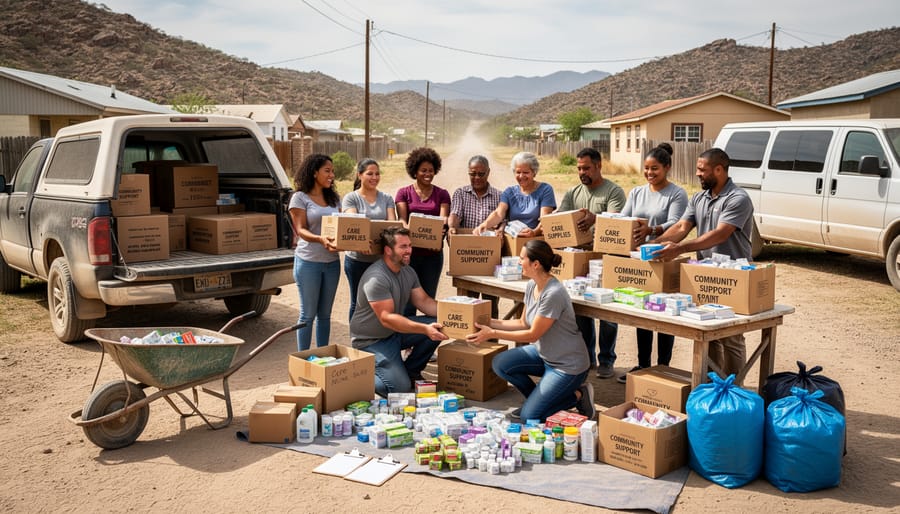
Communities aren’t waiting around. Local volunteers, community-led groups and Indigenous-led initiatives organize spay and neuter clinics, coordinate fosters, and arrange transport south for animals needing a home. They bring deep knowledge of their own communities, and they’re doing the work with far fewer resources than a city shelter. Backing these groups, rather than parachuting in with solutions, is where real change starts.
Safe Havens: Pets, Survivors and Chosen Families
For many people trying to leave an abusive home, the hardest question isn’t “where will I sleep?” It’s “what happens to my dog?” Most traditional shelters can’t take animals, and abusers know it. Threats against a pet become a tool of control, and fear for an animal’s safety can keep someone in danger far longer than they’d stay for themselves.
That’s why pet-friendly safe housing and temporary foster programs matter. When a community group or humane society can board an animal for a few weeks, a person can leave without losing a family member. Some organizations across the country run these arrangements, though availability varies widely by region, so check with your local shelter or crisis line.
The need isn’t evenly felt. LGBTQ+ people facing rejection or violence at home often rely on chosen family and pets for stability, and need LGBTQ+ support that treats their animals as part of the household. Services also have to reckon with how racism and feminism shape who gets believed, housed and helped.
The fix is practical: more foster volunteers, formal partnerships between shelters and anti-violence services, and public funding to match.
Beyond Adoption: The Fight for Smarter, Kinder Rescue
The most promising ideas in animal sheltering don’t start at the shelter door. They start upstream, with the question of why so many animals end up there at all.
Spay/neuter access and community vet care sit at the top of most advocates’ lists. When a low-cost clinic is a short drive away, a litter doesn’t turn into an intake crisis. When it isn’t, as in many rural and northern communities, shelters inherit the problem. The same logic drives trap-neuter-return for community cats: instead of removing free-roaming cats only for them to be replaced, groups sterilize, vaccinate and return them. It’s not tidy, and it has critics, but it treats the cause rather than the symptom.
Foster networks stretch a shelter’s capacity beyond its walls, giving animals a quieter place to decompress than a kennel. Managed intake, where shelters schedule surrenders rather than accepting every animal immediately, can ease overcrowding, though it can also leave a desperate owner waiting. That’s why more programs now focus on keeping pets with their families through help with food, vet bills or temporary care, rather than treating surrender as the only option.
Then there’s the loaded phrase “no-kill.” It sounds like a moral finish line, but the term is a lightning rod for good reason. Here’s a fair look at the trade-offs:
Pros
- It puts a public spotlight on preventable deaths and pushes communities to invest in alternatives.
- It can drive creative programs like fostering, transfers and community outreach.
- It gives donors and volunteers a clear, motivating goal.
Cons
- Limited space can lead to overcrowding and long stays in stressful kennels.
- A label can discourage open conversation about animals who are suffering or unsafe to place.
- Open-admission shelters may absorb the animals that selective-intake groups turn away, shifting harm elsewhere.
The hard question the label can bury is simple: what does a good life look like for an animal who can’t be quickly adopted? A number on a statistics page doesn’t answer that. Capacity, staffing, behavioural support and medical care do. Honest shelters and rescues will talk openly about those limits, and that openness is worth rewarding.
What You Can Do Now (Beyond Posting the Cute Photo)
Sharing the cute photo is fine. It just can’t be the whole plan. Here’s where your time, skills and voice do more good.
Foster, even briefly. Foster homes are the backbone of most rescues, and a two-week stay can free up a kennel for the next animal. Ask what supplies and vet costs the organization covers so money isn’t a barrier.
Offer the skills you already have. Shelters need more than dog-walkers. Translators help newcomer families understand adoption and surrender paperwork. Designers, photographers and writers make listings that actually get animals seen. Drivers move animals to remote communities and vet appointments. If you can write a grant application or run a fundraiser, you’re gold.
Check before you give. Look up whether an organization is a registered charity through the Canada Revenue Agency’s public charity listings. Read its published policies on intake, euthanasia and adoption fees. Transparent groups answer hard questions plainly, and that’s a green flag. Evasiveness is not.
Adopt with your eyes open. Ask how the animal’s history is assessed, what support exists after adoption, and what happens if it doesn’t work out. Good shelters welcome the questions.
Push on the systems. Many surrenders trace back to “no pets” clauses and the cost of care. Back tenant and housing campaigns that push for pet-friendly rentals, and write to your MLA, MPP or city councillor about animal welfare law and funding for community vet access. Check your provincial legislature’s website for what’s actually on the table before you write.
No single foster home fixes a system built on patchwork funding and unequal access. Individual kindness matters, but the lasting wins come when people organize, vote and demand better together.
Go back to that kennel at closing time, the one where a volunteer lingers a minute longer than she should. What she’s holding isn’t only a leash. It’s a question about who we decide deserves care, and who gets the resources to give it.
Canada’s shelters mirror us. They show how we treat poverty, how we house people, how we serve communities far from city limits, and how seriously we take the creatures who depend on us. A stretched shelter is rarely a failure of kindness. It’s a failure of policy, funding and priorities.
So build the more just version. Push for stronger protections. Back vet access and pet-friendly housing. Support the local rescuers doing the work without applause, and ask hard questions of every organization you give to. Then take this conversation to your neighbours, your council, your group chat. Justice for animals and justice for people were never separate fights. Start where you live, and don’t stop.