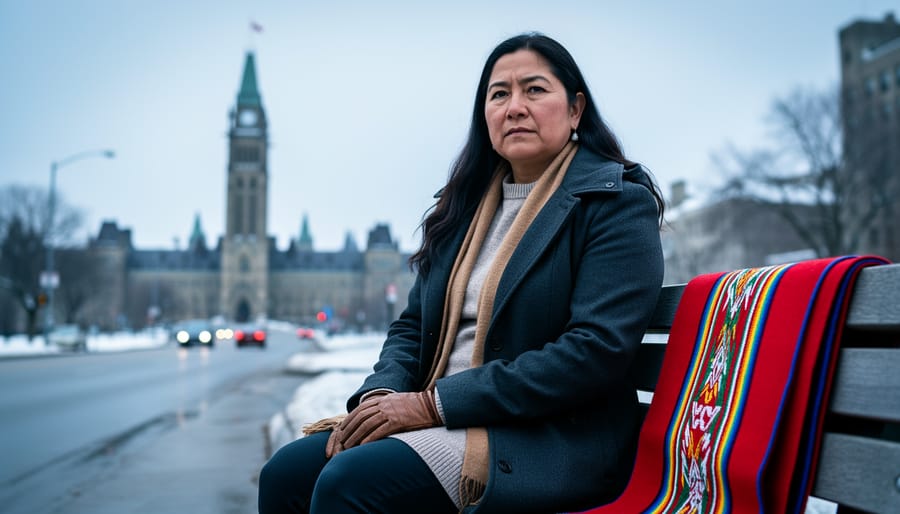
Canada’s political landscape in 2026 continues to be defined by a stark pattern: bold promises to Indigenous peoples followed by half-measures, surveillance expansions dressed as security, and international scrutiny that reveals what many already know. While the United Nations Human Rights Committee concluded its review of Canada’s seventh periodic report this March, raising urgent concerns about violence against Indigenous women and girls linked to resource extraction projects, the federal government’s response remains troublingly familiar. A national action plan addressing missing and murdered Indigenous women, girls, and gender-diverse people exists on paper, yet the violence persists. Bill C-21, the Red River Métis Self-Government Recognition and Implementation Treaty, represents a historic step forward, but implementation will test whether this government can finally deliver on self-determination promises or whether it’s another symbolic gesture without teeth.
The proposed Strong Border Act looms large, expanding surveillance powers under the guise of border security in ways that should alarm anyone who understands how such measures disproportionately target Indigenous communities and racialized people. UN experts flagged these concerns, but Ottawa shows little sign of reversing course. For progressive Canadians demanding accountability, the questions are clear: Will the Métis treaty translate into genuine sovereignty and resource control? Will the action plan on missing and murdered Indigenous women actually interrupt the violence, or simply document it? And who pays the price when border surveillance tools inevitably turn inward?
The answers matter because broken promises have body counts. What happens next depends on whether Canadians are willing to move beyond performative reconciliation and demand structural change.
What Changed: Major Developments Reshaping Indigenous Politics
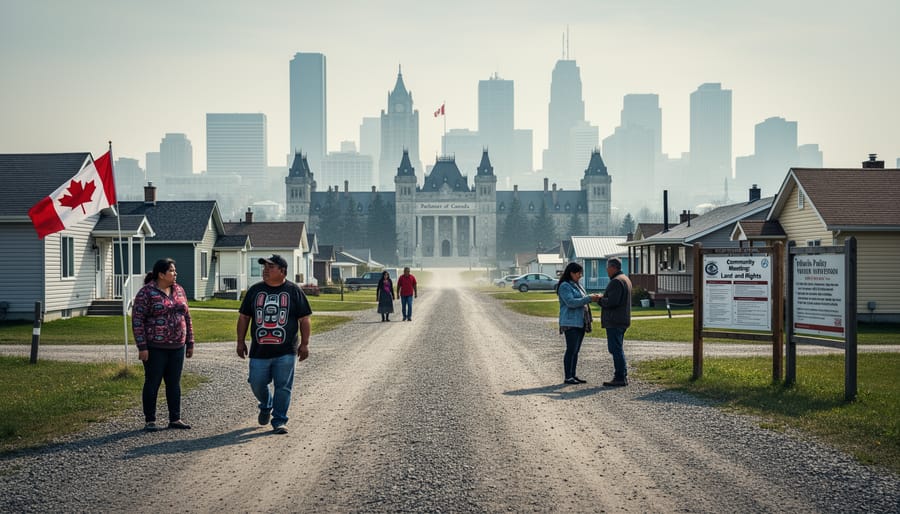
Three major political developments have shifted the landscape for Indigenous rights in Canada this year. In March 2026, the UN Human Rights Committee concluded its review of Canada’s seventh periodic report, raising pointed concerns about violence against Indigenous women and girls linked to extraction projects while acknowledging steps like the Responsible Business Conduct Strategy. Meanwhile, Bill C-21, the Act to give effect to the Red River Métis Self-Government Recognition and Implementation Treaty, advanced through Parliament, marking a significant moment for Métis self-determination. At the same time, the proposed Strong Border Act drew criticism from Committee Experts worried about expanded surveillance powers and their potential impact on Indigenous communities.
These developments aren’t isolated policy updates. They’re flashpoints that expose the ongoing tension between Canada’s public commitments to reconciliation and the political choices being made right now. The UN scrutiny arrived as the federal government released a national action plan addressing missing and murdered Indigenous women, girls, and gender-diverse people, but questions about implementation and accountability remain sharper than ever. Each development carries implications that extend beyond legislative halls into the lived reality of Indigenous communities navigating broken promises and renewed political pressure.
Key Developments in Indigenous Politics This Year
1. UN Human Rights Committee Scrutinizes Canada’s Record
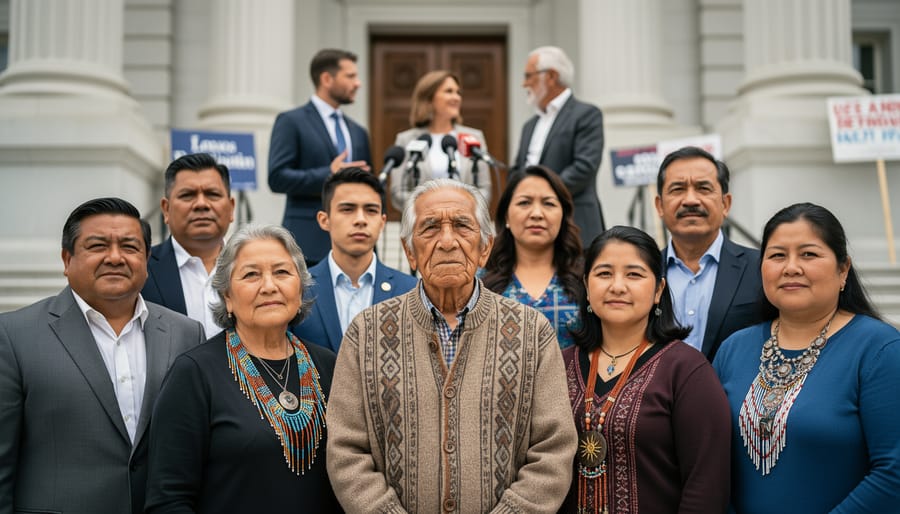
In March 2026, Canada faced international scrutiny when the UN Human Rights Committee wrapped up its CCPR review of Canada’s seventh periodic report on March 4. The Committee’s concerns cut to the heart of one of Canada’s most persistent political failures: the ongoing violence against Indigenous women and girls, particularly in communities near resource extraction projects. While federal politicians have spent years talking about reconciliation, UN experts pointed to a disturbing pattern linking industrial development to the safety crisis facing Indigenous women.
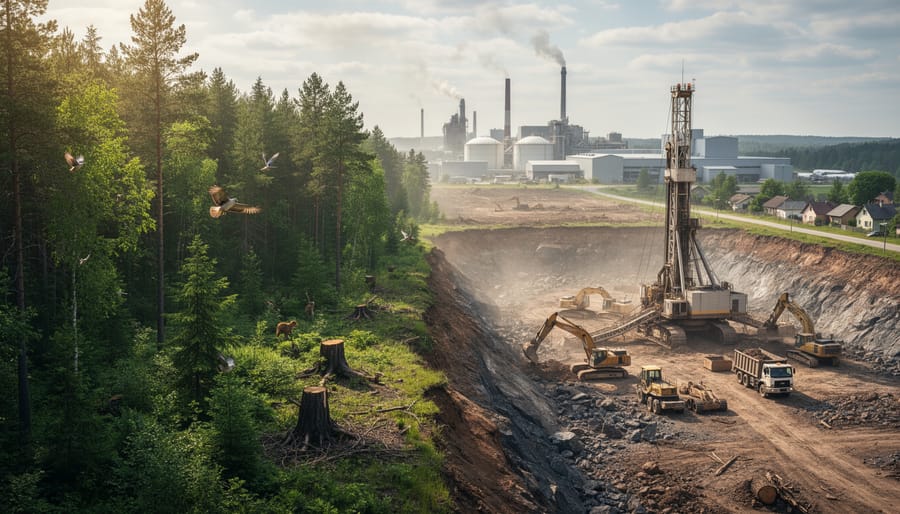
The Committee didn’t pull punches about the connection between extractive industries and violence. Their concerns reflect what Indigenous communities have been saying for decades: when resource projects push into their territories, violence against women and girls escalates. Yet development continues, often with federal approval, creating what amounts to sacrifice zones where Indigenous women’s lives are treated as acceptable collateral damage for economic gain.
Committee Experts did acknowledge some federal efforts, welcoming the creation of the Responsible Business Conduct Strategy and the Canadian Ombudsman for Responsible Business. These represent attempts to hold Canadian companies accountable for human rights impacts, both domestically and abroad. The federal government has also released a national action plan addressing missing and murdered Indigenous women, girls, and gender-diverse people. On paper, these look like progress.
But here’s the political reality: Canada’s track record shows a massive gap between announcing initiatives and delivering meaningful change. The UN review landed at a moment when extraction projects continue advancing into Indigenous territories, often over explicit opposition from the communities most affected. Committee Experts raised these concerns because international observers see what many Canadians miss in mainstream political coverage, reconciliation rhetoric doesn’t match policy outcomes when development dollars are at stake.
2. Red River Métis Self-Government Treaty Moves Forward
Bill C-21 landed in Parliament this year as something more than legislation, it’s a test case for whether Canada means what it says about Indigenous self-determination. The Act to give effect to the Red River Métis Self-Government Recognition and Implementation Treaty represents the first modern treaty recognizing Métis self-government, and it’s arrived at a moment when reconciliation rhetoric badly needs concrete follow-through.
The treaty framework acknowledges Red River Métis authority over citizenship, governance structures, and internal decision-making without requiring provincial consent or federal micromanagement. That’s significant. For over a century, Métis nations have fought for recognition of their distinct political status, often stuck in jurisdictional limbo while First Nations and Inuit negotiated their own arrangements. This treaty puts Métis self-governance on equal legal footing, at least on paper.
But context matters here. The federal government continues collaborating with Indigenous peoples on changes to laws and policies while simultaneously facing UN scrutiny for its record on Indigenous rights. Bill C-21 could signal a genuine shift in federal-Indigenous relations, where Ottawa recognizes that self-determination means transferring real decision-making power, not just creating advisory bodies that governments ignore when convenient.
The broader question is whether this treaty becomes a template or an exception. Other Métis nations are watching closely. So are First Nations pursuing their own self-government agreements. If implementation actually delivers on the treaty’s promises, if Red River Métis can exercise authority without constant federal interference, it strengthens the case for similar arrangements elsewhere. If the treaty gets gutted through regulation or starved of resources, it becomes another example of symbolic politics masquerading as justice.
What happens next with Bill C-21 will reveal whether Canada’s reconciliation commitments extend beyond words into structural change that actually redistributes power.
3. Proposed Strong Border Act Raises Indigenous Rights Concerns
While Ottawa promotes reconciliation, a proposed border security bill has set off alarm bells for Indigenous communities whose territories don’t recognize colonial boundaries.
During the March 2026 UN Human Rights Committee review, Committee Experts specifically flagged concerns about the proposed Strong Border Act. One expert pointed out that the legislation would significantly expand surveillance powers for border authorities, a development with direct implications for Indigenous nations whose traditional lands span the Canada-US border.
The concern isn’t theoretical. Dozens of First Nations communities have territories that existed long before the 49th parallel was drawn across their homelands. The Mohawk Nation at Akwesasne, the Blackfoot Confederacy, the Coast Salish peoples, these nations have exercised their inherent right to cross what they view as an artificial line for ceremony, family, trade, and traditional practices. Increased surveillance threatens to criminalize movement that Indigenous peoples consider a treaty-protected right.
The timing matters. Indigenous land defenders and water protectors have faced increased monitoring and police attention during pipeline protests and extraction conflicts. Handing border authorities expanded surveillance powers raises questions about how those tools will be deployed against communities already targeted for political activism. Will crossing for ceremony trigger alerts? Will data be shared with provincial police forces investigating land defense actions?
The federal government hasn’t adequately addressed how the Strong Border Act will respect Indigenous jurisdiction and mobility rights. There’s no clear exemption for Indigenous peoples exercising treaty rights, no consultation framework that meets the standard of free, prior, and informed consent, and no accountability mechanism if the new powers are misused against Indigenous travelers.
This contradiction, pursuing self-government recognition while simultaneously expanding state surveillance over Indigenous territories, captures the gap between reconciliation rhetoric and political reality that defines so many current Indigenous issues in Canadian politics.
Why It Matters: The Bigger Picture for Indigenous Communities
These political developments expose a troubling pattern that defines Indigenous relations in Canada: the federal government consistently promises transformative change while its policies perpetuate the same extractive, surveillance-heavy approach that has harmed Indigenous communities for generations. The UN review landed precisely because Canada’s reconciliation rhetoric rarely survives contact with political and economic reality.
The Committee’s focus on violence against Indigenous women and girls tied to extraction projects isn’t coincidental. Resource development on Indigenous lands creates influxes of transient workers, disrupts community safety networks, and subjects women to documented patterns of harassment and violence. The national action plan addressing missing and murdered Indigenous women, girls, and gender-diverse people represents a hard-won acknowledgment of these harms, yet implementation remains painfully slow. Plans and strategies proliferate while extraction projects continue advancing, often over Indigenous objections expressed through legal channels, protests, and international appeals.
The proposed Strong Border Act illustrates another systemic problem: Indigenous peoples face intensified surveillance and criminalization when they assert rights or resist resource extraction. The surveillance powers flagged by Committee Experts disproportionately affect Indigenous communities, many of whom have territories crossing colonial borders and long histories of being monitored when they organize politically. This isn’t hypothetical. Indigenous land defenders have faced surveillance, infiltration, and prosecutions that treat environmental activism as a security threat.
Meanwhile, self-determination advances at a glacial pace. The Red River Métis treaty represents genuine progress, but one treaty after decades of negotiations highlights how slowly Canada moves when Indigenous nations seek meaningful control over their lands, governance, and futures. Federal collaboration on law and policy reform sounds promising until you examine the power imbalances baked into consultation processes that treat Indigenous input as optional rather than determinative.
The Responsible Business Conduct Strategy and Ombudsman that the Committee welcomed remain largely untested mechanisms. Their real value depends on enforcement, transparency, and whether they can actually hold extractive industries accountable when projects harm Indigenous communities. Past experience suggests caution.
What to Watch: Next Steps and Unresolved Questions
The real test of these political developments isn’t what happened in March 2026. It’s what comes next, when cameras move on and promises face the hard work of implementation.
Bill C-21’s passage marks the beginning, not the end, of Red River Métis self-government. Watch how quickly Ottawa transfers actual jurisdiction and resources versus creating another layer of consultation theatre. Implementation timelines matter. So do budget commitments. When self-government treaties stall in the “capacity building” phase indefinitely, that’s a political choice disguised as process.
The proposed Strong Border Act remains unresolved, and that’s where pressure counts. Committee Experts flagged surveillance concerns for good reason. Indigenous communities with territories crossing the Canada-US border, activists organizing against pipelines and extraction projects, land defenders facing state monitoring, these are the people who’ll bear the cost of expanded border powers. Track which politicians echo those UN concerns in parliamentary debate and which ones prioritize “security” rhetoric that historically targets Indigenous resistance.
Canada’s response to the March 2026 UN Human Rights Committee review will reveal whether reconciliation is policy or performance. The Committee raised specific concerns about violence against Indigenous women and girls linked to extraction projects. A genuine response addresses extraction, not just violence after the fact. Watch for:
- Concrete restrictions on resource projects in territories where Indigenous women face documented violence
- Mandatory human rights impact assessments before approving extraction permits
- Enforcement mechanisms for the Responsible Business Conduct Strategy beyond voluntary compliance
- Timelines and funding for implementing the national action plan on missing and murdered Indigenous women, girls, and gender-diverse people
- Federal law and policy reforms developed in genuine collaboration with Indigenous peoples, not consultation as box-checking
The national action plan on MMIWG2S+ exists. What matters now is whether it gets resourced, enforced, and measured against outcomes that Indigenous communities define, not bureaucratic benchmarks that make good press releases.
Accountability doesn’t happen automatically. It requires sustained attention to implementation gaps, budget allocations that match rhetoric, and political consequences for governments that treat Indigenous rights as symbolic gestures. These developments create openings for change. Whether they deliver change depends on who’s watching and who’s willing to make noise when promises dissolve into process.
Common Questions About Indigenous Political Issues in Canada
What does the UN Human Rights Committee review actually mean for Canada’s policies?
The March 2026 review puts international pressure on Canada to close the gap between reconciliation promises and action, particularly on violence against Indigenous women and girls linked to extraction projects. However, UN recommendations aren’t legally binding, real change depends on whether the federal government implements them and faces accountability for inaction.
How does the Red River Métis self-government treaty affect other Indigenous nations?
Bill C-21 sets a precedent that other Indigenous nations can point to when negotiating their own self-determination agreements with the federal government. The treaty demonstrates one pathway to sovereignty, though each nation’s circumstances and existing rights are different, and the slow pace shows how long meaningful self-governance still takes to achieve.
Why do extraction projects continue despite concerns about violence against Indigenous women and girls?
Economic interests and corporate influence in Canadian politics routinely override Indigenous rights and safety, even when government acknowledges the links between resource extraction and violence. The Responsible Business Conduct Strategy and Canadian Ombudsman for Responsible Business are steps forward, but they don’t stop projects, they exist alongside ongoing extraction that Indigenous communities oppose.
What can non-Indigenous Canadians actually do beyond performative allyship?
Concrete action means supporting Indigenous-led campaigns against harmful projects, demanding your MP prioritize implementation of the national action plan on missing and murdered Indigenous women and girls, and redirecting resources to Indigenous organizations doing the work. Follow and amplify Indigenous journalists, activists, and land defenders who are reporting what mainstream media ignores, and show up when they call for solidarity at critical moments.
These questions reflect what progressive Canadians are asking as they try to make sense of political developments that mix acknowledgment with continued harm. The UN review, the Métis treaty, and the national action plan signal awareness of longstanding injustices, yet extraction continues, surveillance powers expand through legislation like the proposed Strong Border Act, and implementation timelines stretch across years while communities face immediate threats.
The disconnect isn’t accidental. It’s how Canadian politics has always functioned when it comes to Indigenous peoples, creating frameworks and strategies that look like progress while leaving the power structures that cause harm fundamentally unchanged. Understanding this pattern is the first step toward demanding something different.
These developments aren’t separate news items, they’re threads in the same ongoing struggle for Indigenous sovereignty, safety, and self-determination. The UN review exposed what mainstream media often buries: the direct link between resource extraction and violence against Indigenous women and girls. The Métis self-government treaty represents genuine progress, but it took generations of advocacy to reach this point. The proposed Strong Border Act threatens to expand surveillance on the very communities already targeted for defending their lands.
Reconciliation can’t survive on symbolic gestures and carefully worded announcements. It demands sustained political pressure, transparent accountability mechanisms, and structural change that shifts power back to Indigenous nations. The gap between what politicians promise during photo ops and what they deliver in legislation reveals where the real priorities lie.
Stay informed beyond the surface-level coverage. Amplify Indigenous journalists, land defenders, and community leaders who’ve been telling these stories long before they became convenient political talking points. Demand your representatives support substantive action, not just acknowledgments of territory at public events, but concrete policy reforms that address violence, honour treaties, and respect self-governance. Track whether the national action plan on missing and murdered Indigenous women, girls, and gender-diverse people produces measurable results or becomes another report gathering dust.
The path forward requires us to recognize these issues as interconnected and urgent, not historical footnotes.